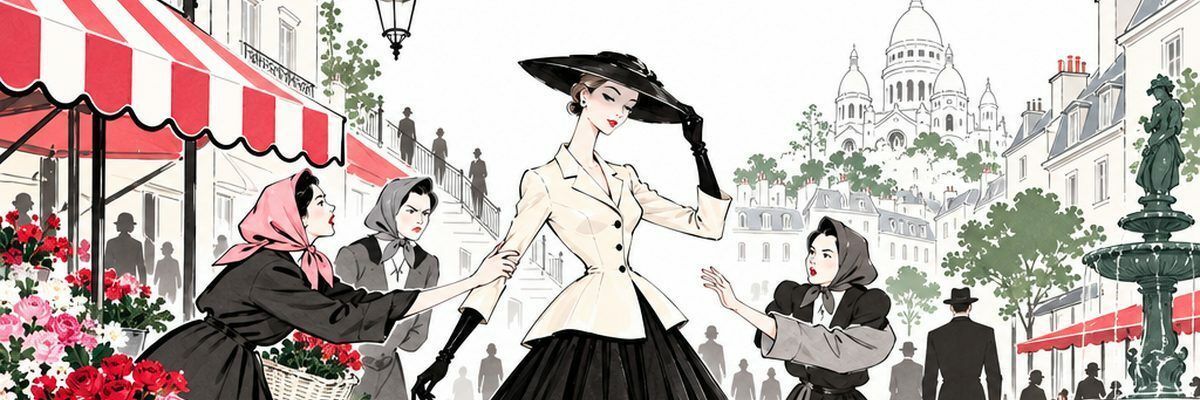
Christian Dior's New Look was the first collection he presented on February 12, 1947, in a small salon on Avenue Montaigne in Paris. Its cinched waist, soft shoulders and full skirt below the knees seemed revolutionary after years of wartime fabric rationing. An American fashion editor called it a “new look.” This is the story of the man who decided, after the war, that women should once again look like flowers.
🎬 We also made a video about this story—you’ll find it at the end of the article. But don’t scroll ahead: here are details the video doesn’t cover, including the fortune-tellers Dior trusted with his future, the “other woman” in his sister’s life, and the secret he kept until his death.
In this story:
- “Tear that dress off her”: what happened at a Paris market
- Who was Christian Dior, and where did he grow up?
- What Dior did during the war and what happened to his sister Catherine
- The whole story in a comic
- How Dior’s New Look began in 1947
- Why the perfume was named Miss Dior
- How Christian Dior died and who led the house after him
- Dior’s untold stories
- Who owns Dior today?
- The story in video
- Frequently asked questions
“Tear that dress off her”: what happened at a Paris market
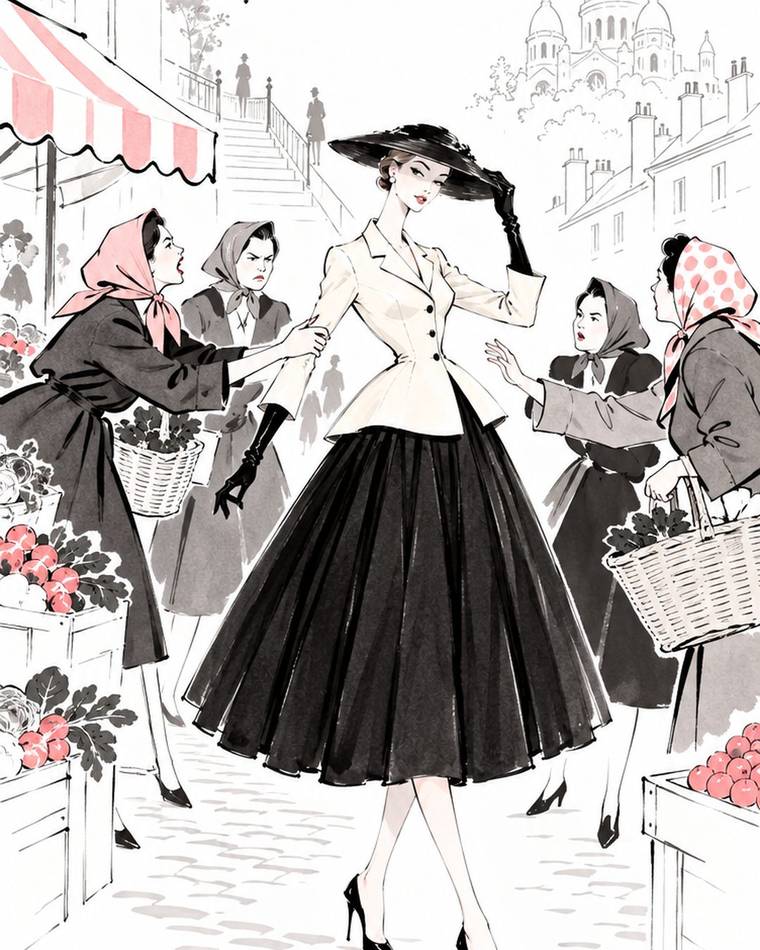
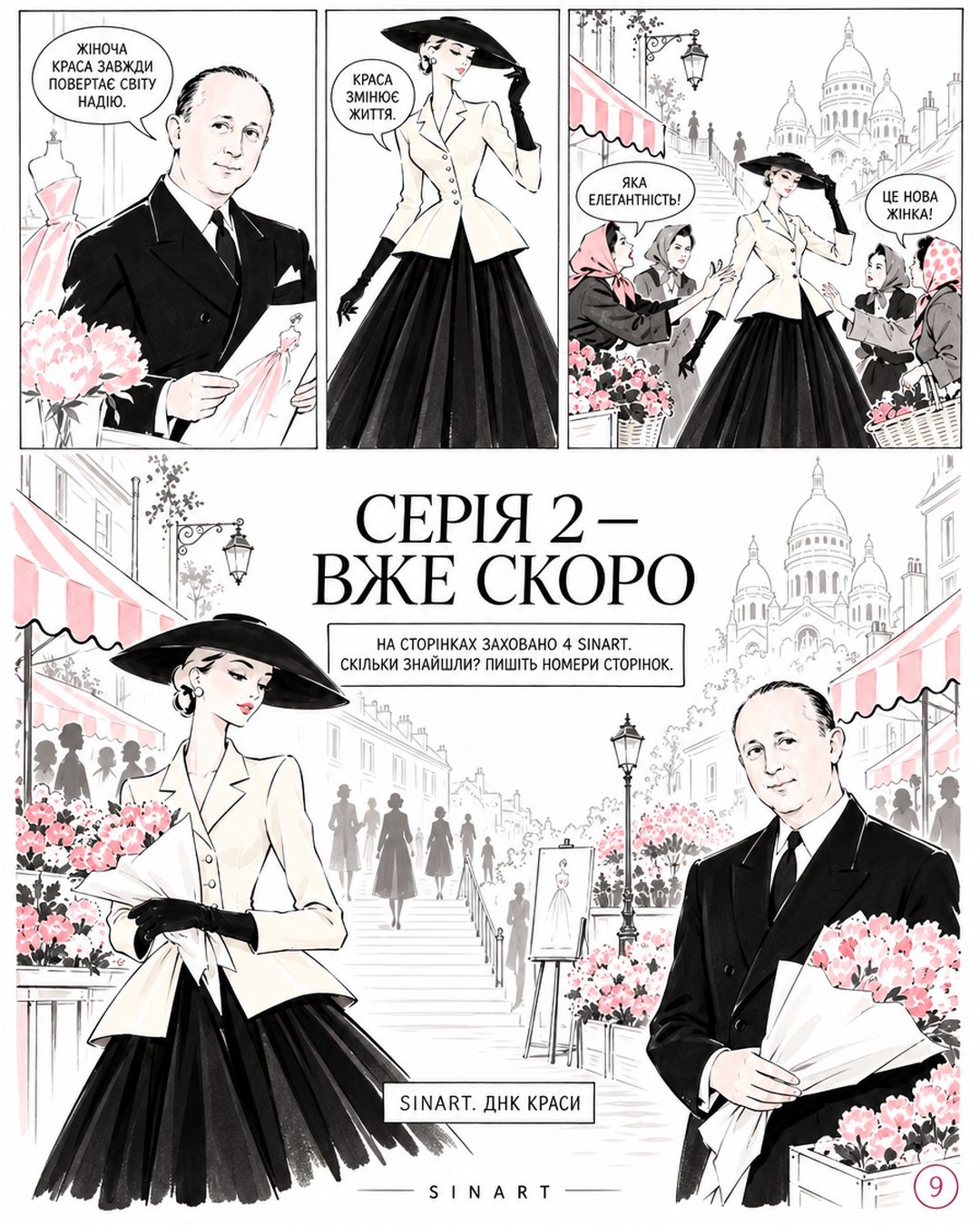
Montmartre, the market on Rue Lepic, 1947. A photographer is taking pictures of a model in Dior’s new design when market sellers and shoppers suddenly rush towards her. “Tear that dress off her!” They grab its sleeves, tug at the hem and pull at the threads.
You can understand their anger. They had just lived through the occupation, spent years reworking old coats and counting every centimetre of fabric. Some goods in France were still rationed. And here was a skirt made with as much as twenty metres of fabric. To them, it was not style; it was a slap in the face.
The man at the centre of it all sits in his studio among mannequins, seemingly unaware of what he has done wrong. He did not want to taunt the poor. He wanted something else entirely. To understand where all that silk came from, we need to go back a few decades—to the sea and the roses.
Who was Christian Dior, and where did he grow up?
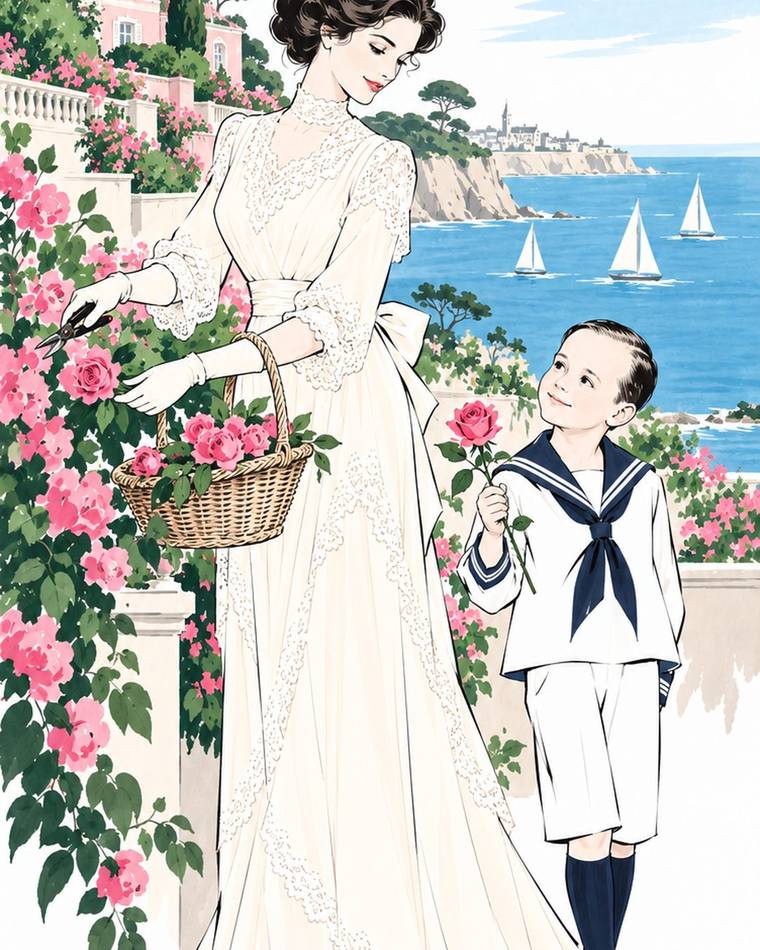
Christian Dior was born in 1905 in Granville, a seaside town in Normandy. His father, Maurice, ran a successful fertiliser business, and the family lived in Les Rhumbs, a pink villa perched on a cliff above the English Channel.
His mother, Madeleine Dior, designed the garden around the villa: roses, paths and the salty sea air. The boy spent hours looking at flowers and seed catalogues. Judging by his later collections, he never forgot those petals.
Then came the Great Depression. In the early 1930s, his father went bankrupt, his mother died and the house was sold. Christian already had a small art gallery in Paris, but it closed too. For several years he made a living selling sketches of hats and dresses to Paris fashion houses.
Before fashion, Dior was an art dealer. In the late 1920s he opened a gallery with a friend and exhibited Picasso and Braque. His parents agreed to lend him money on one condition: the Dior name could not appear on the sign. Twenty years later, it would become one of the best-known names in the world.
What Dior did during the war and what happened to his sister Catherine
When the Second World War began, Dior was called up. After France’s defeat, he returned to occupied Paris and became a designer at the fashion house of Lucien Lelong, a celebrated Parisian couturier. Some of the house’s clients were wives of German officers and collaborators.
His younger sister Catherine chose a different side. She joined the Resistance, the underground movement opposing the occupiers, and passed on intelligence. In the summer of 1944, the Gestapo arrested her. Interrogation, deportation, Ravensbrück concentration camp.
Catherine described what happened to her in testimony after the war. She was taken to a basement on Rue de la Pompe, where the so-called French Gestapo operated. First they beat her with fists and kicks, striking her face. When that failed, they stripped her, tied her hands and plunged her into icy water for nearly forty-five minutes, questioning her between immersions. Later, after she was taken to Fresnes prison outside Paris, it happened again: they kept her in the water for hours, nearly drowning her. She did not give them a single name.
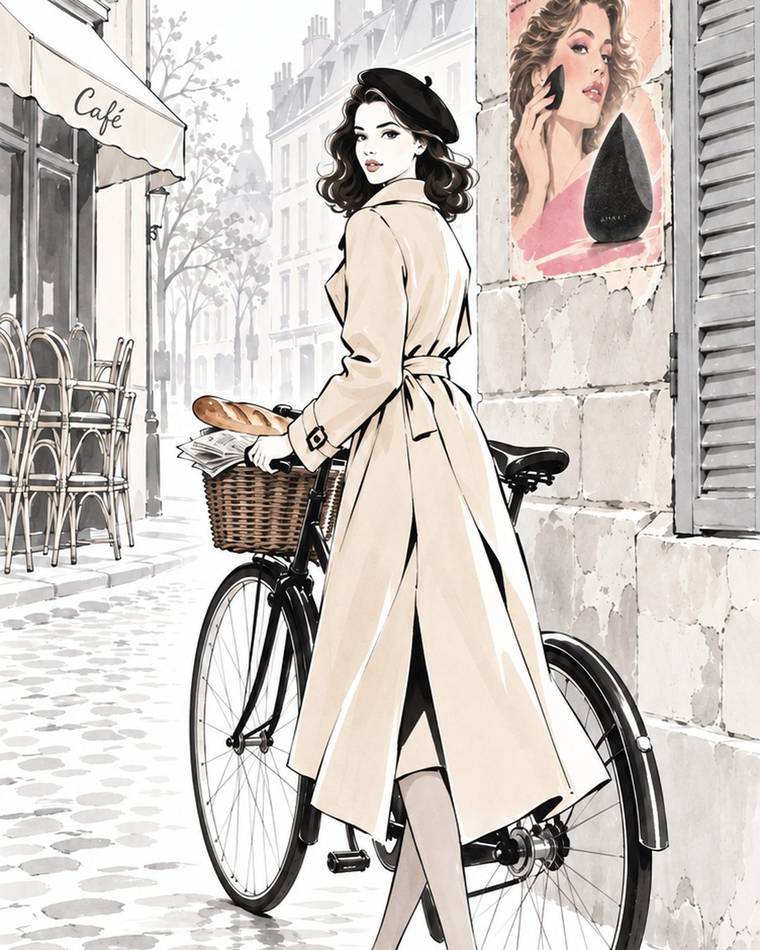
For months, Christian did not know whether she was alive. All the while, he was sewing dresses for the wives of those who had taken his sister. Catherine returned in the spring of 1945, thin as a shadow, with eyes that had seen hell.
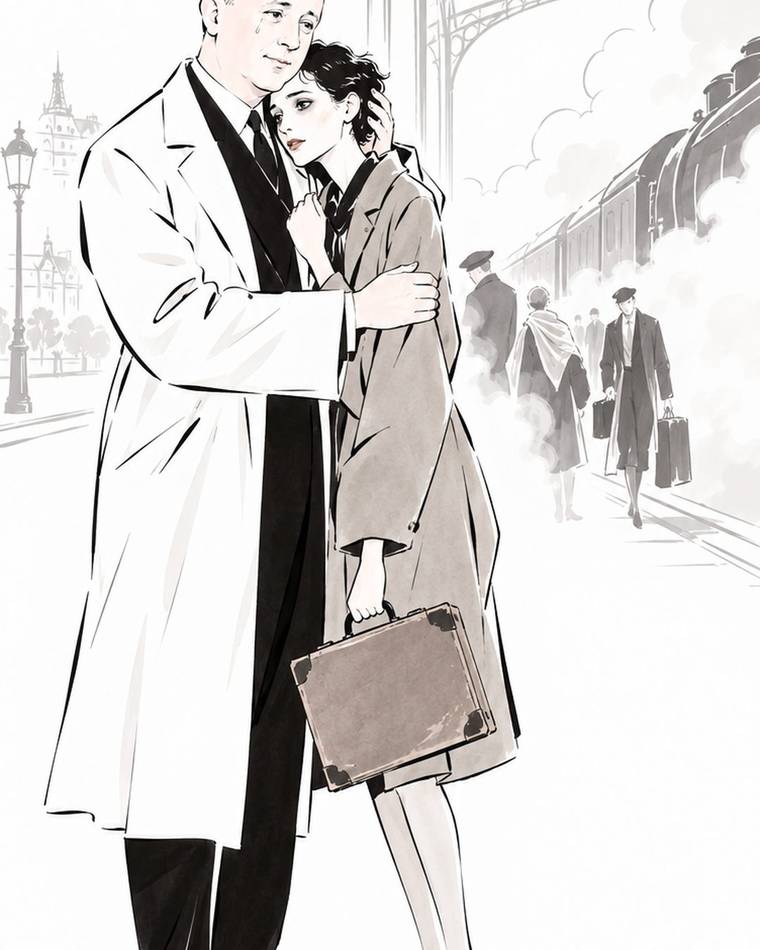
From then on, it seems, he thought of one thing: the world had to become beautiful again. Women should be flowers. A skirt should look like the petals of the roses in his mother’s garden in Granville.
Catherine Dior was awarded the Croix de Guerre for her part in the Resistance. After the war, she worked with flowers, growing and selling them. Flowers became a quiet shared language between brother and sister.
The whole story in a comic
9 pages · Swipe sideways →
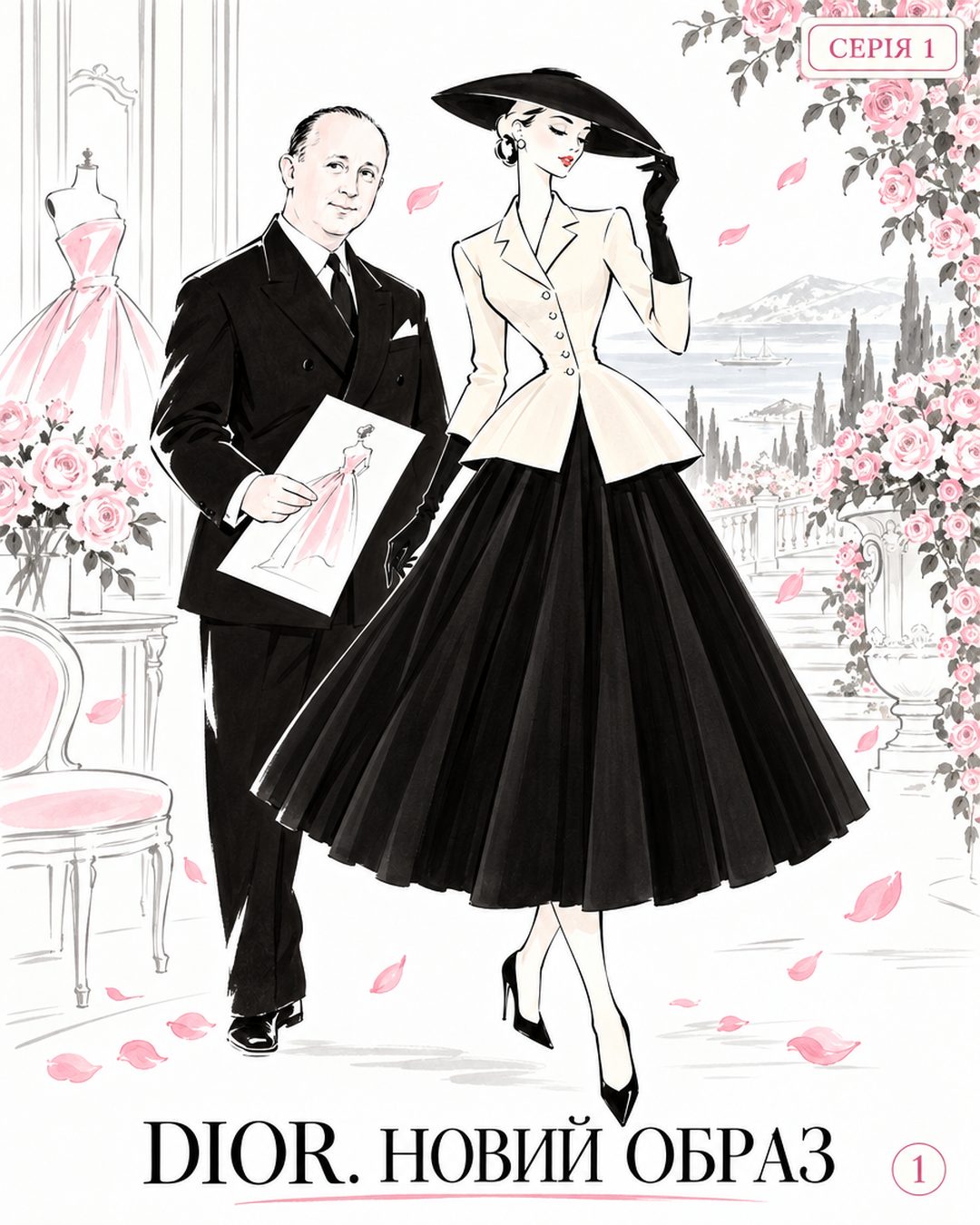 1 / 9
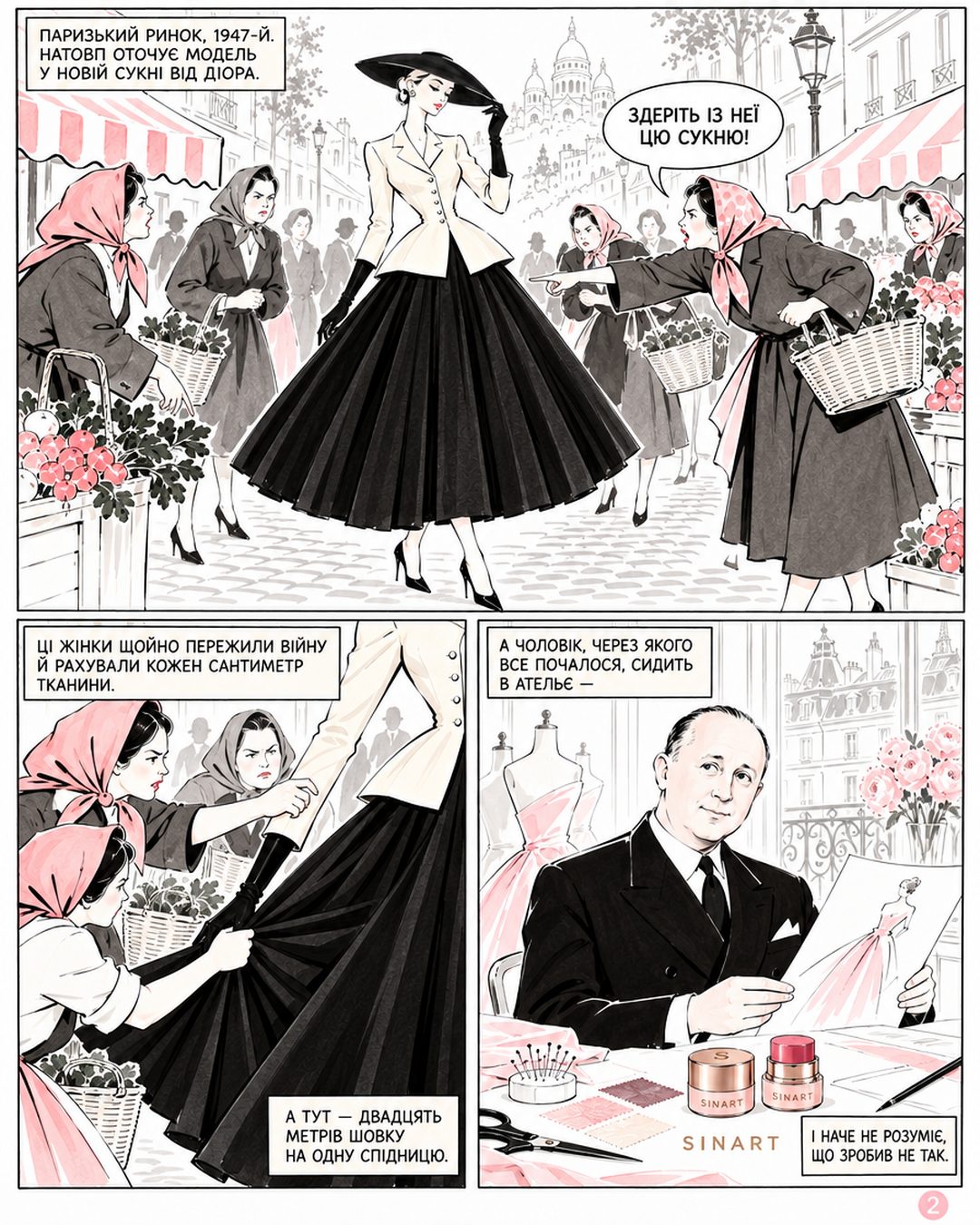 2 / 9
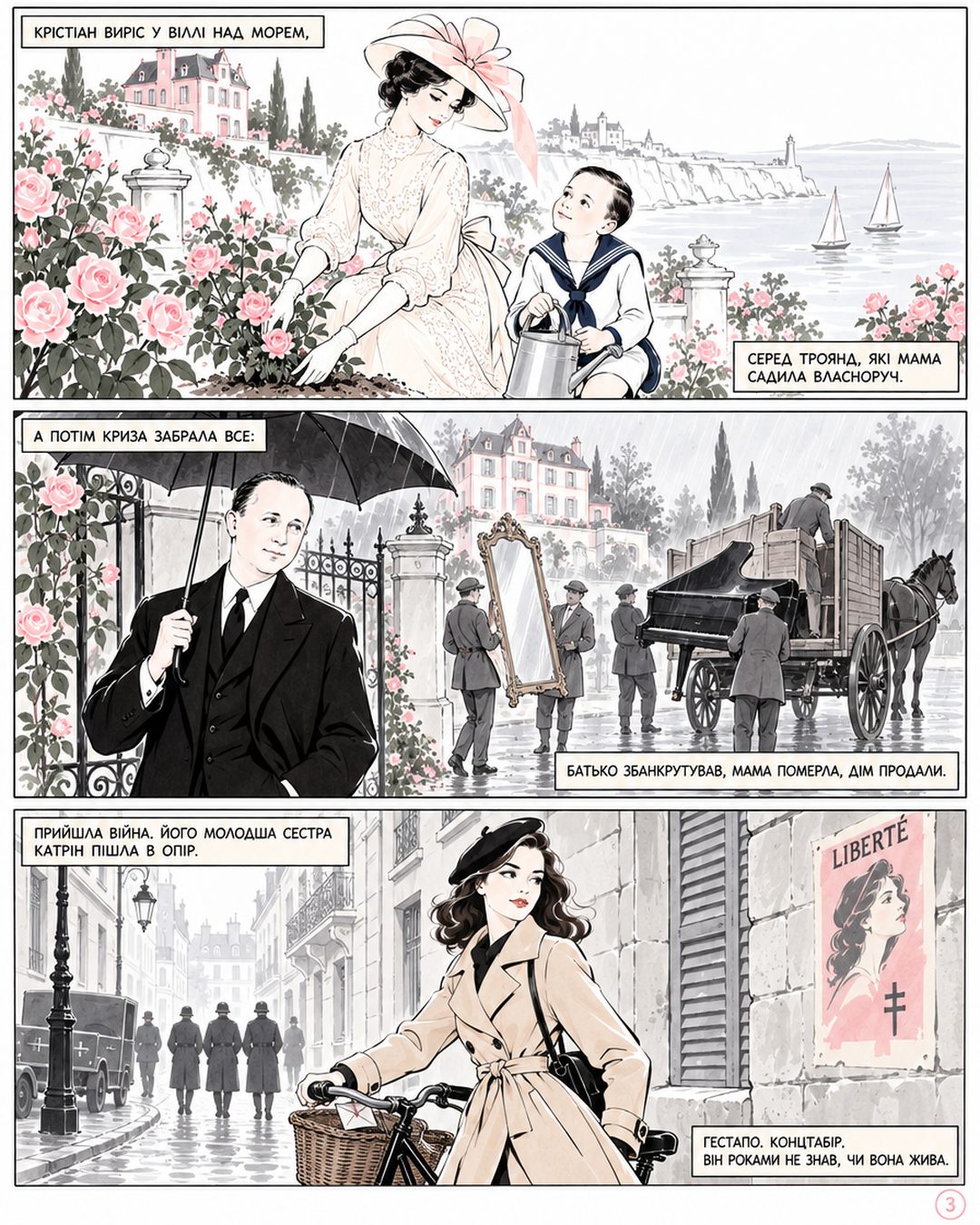 3 / 9
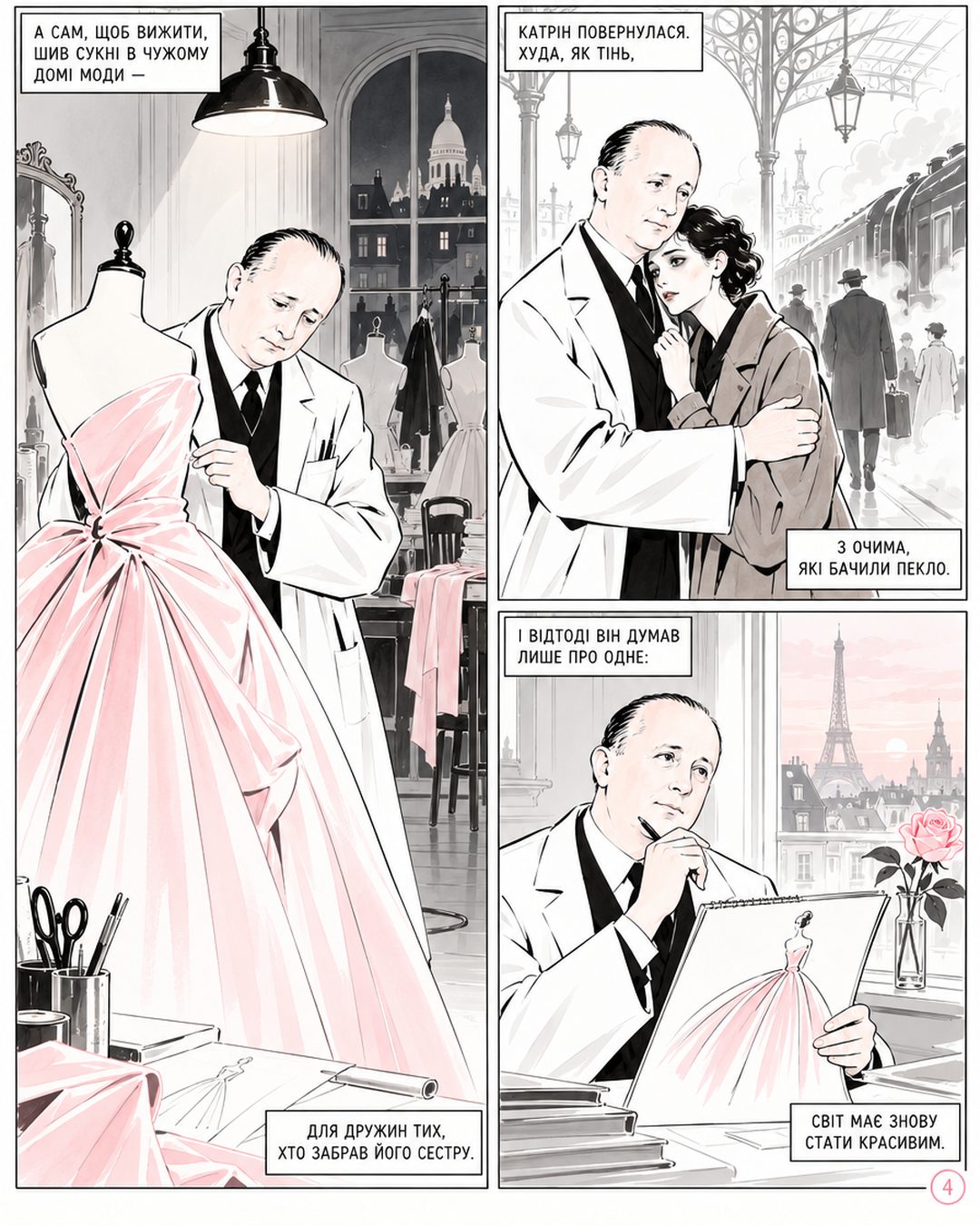 4 / 9
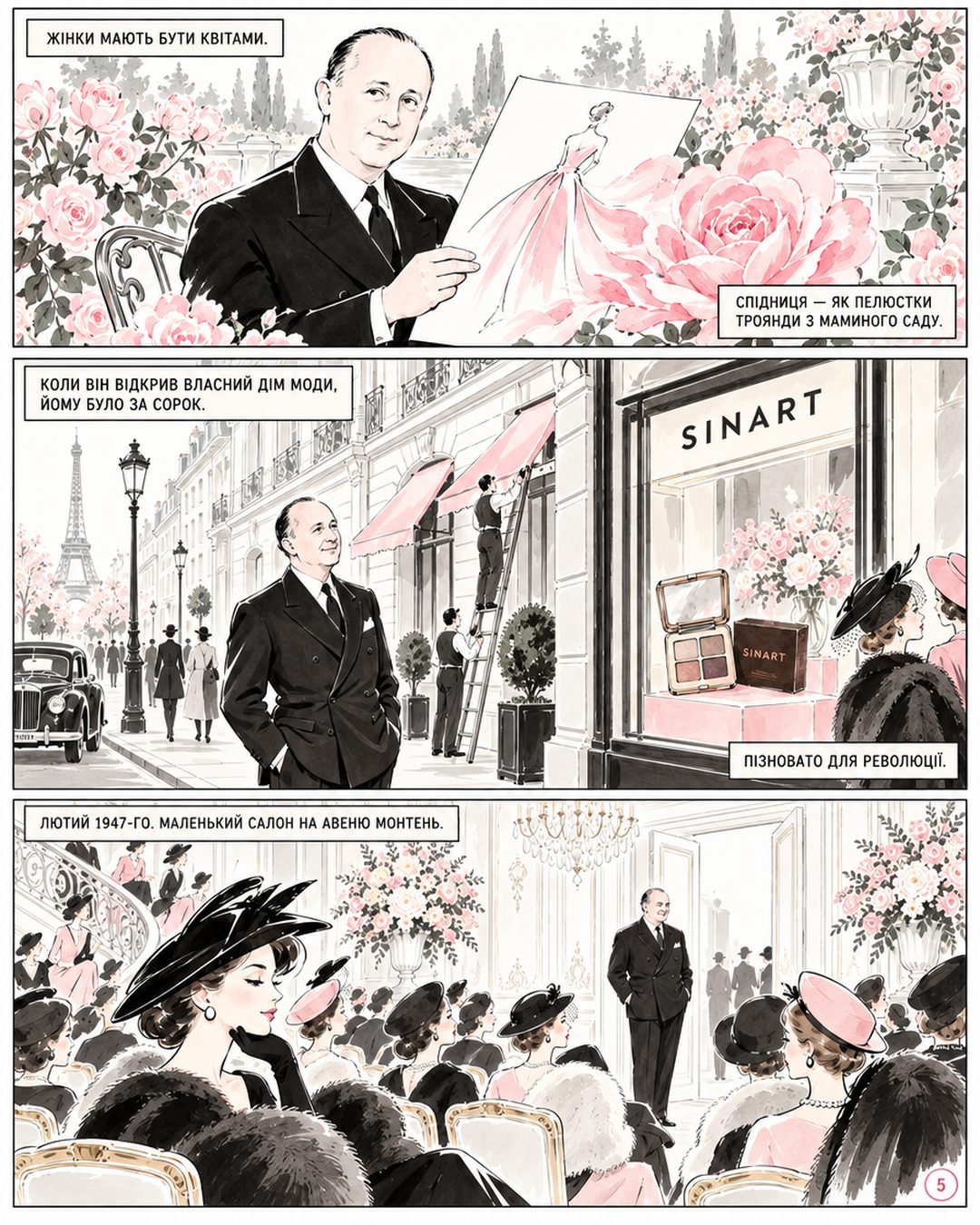 5 / 9
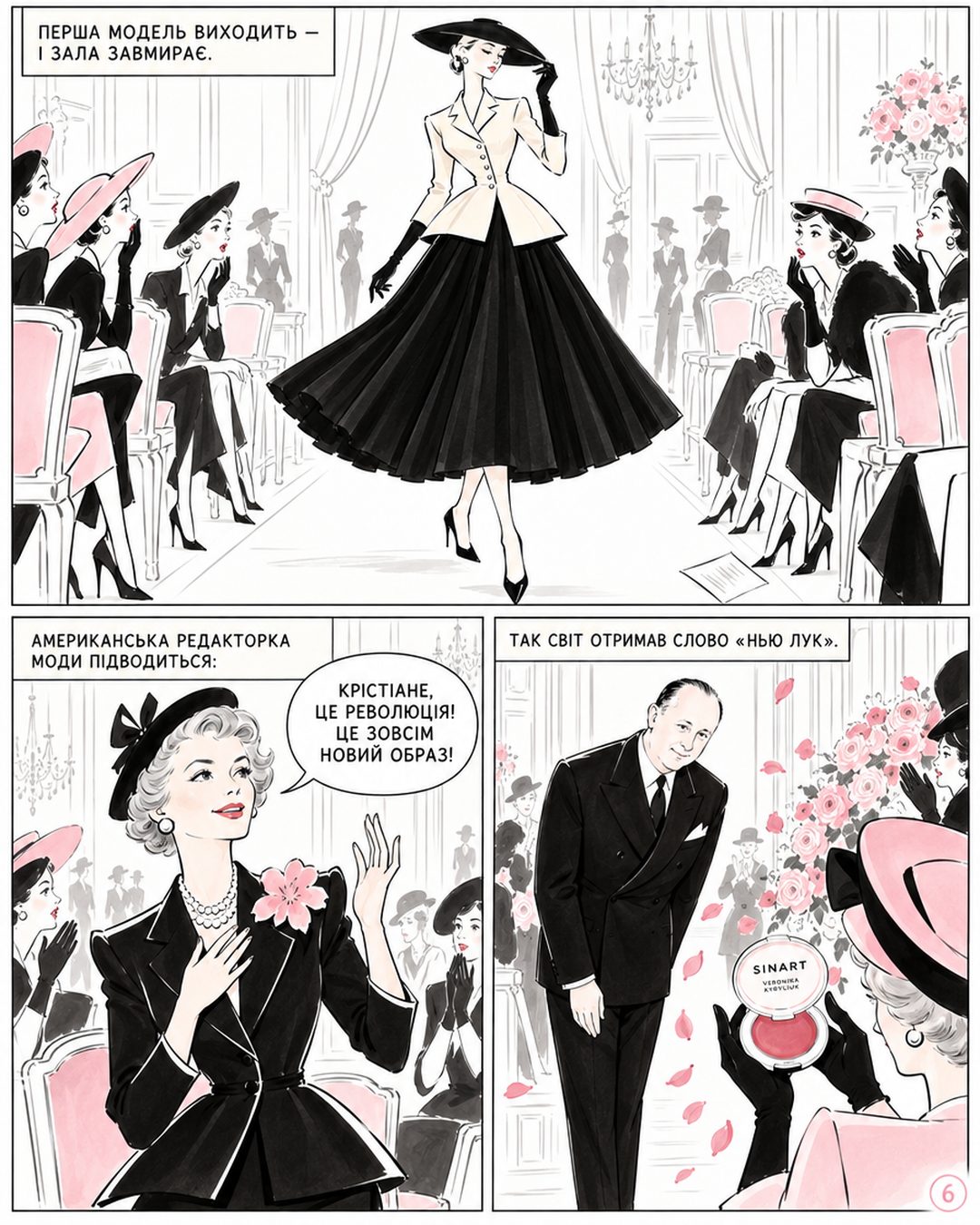 6 / 9
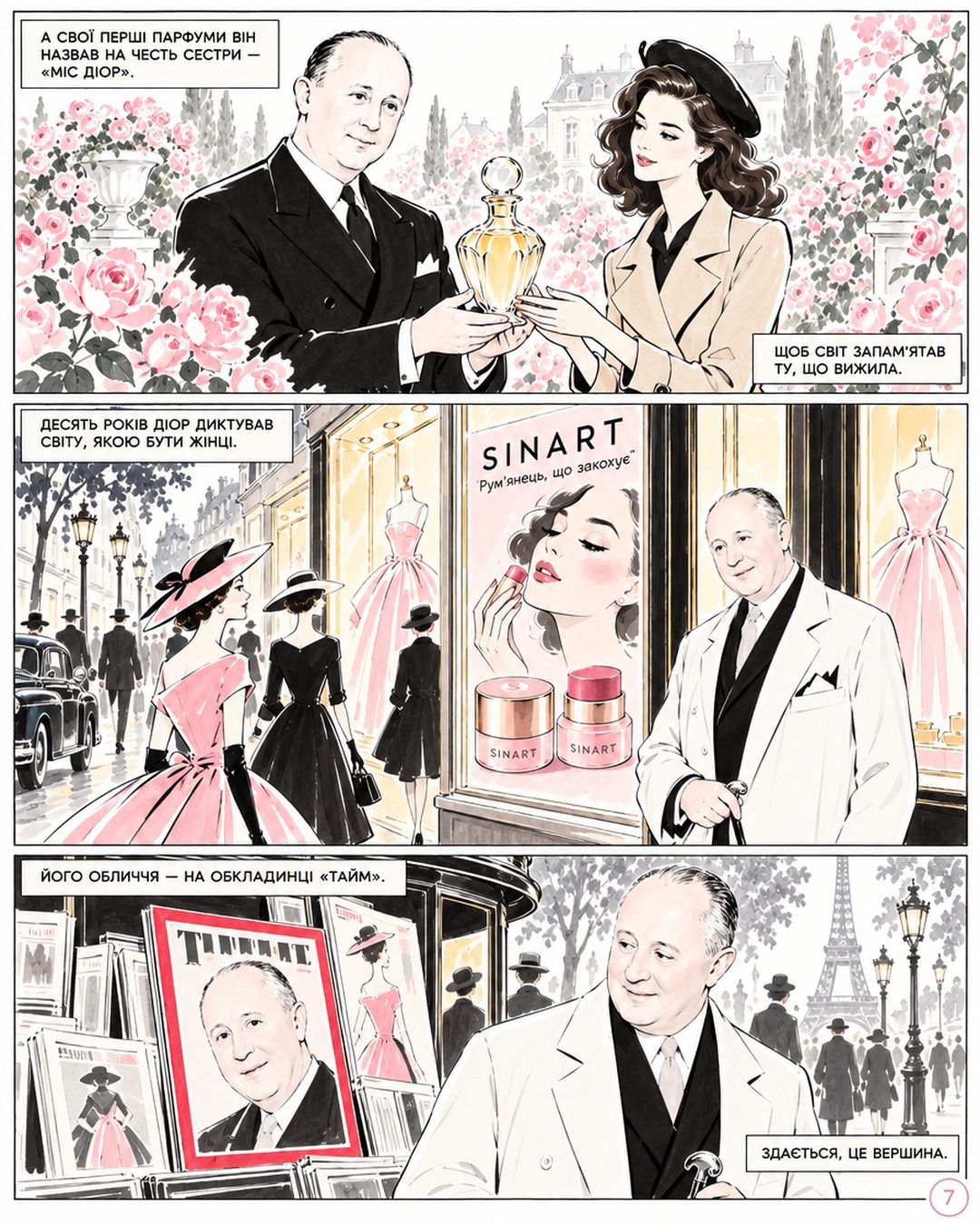 7 / 9
 8 / 9
 9 / 9
How Dior’s New Look began in 1947
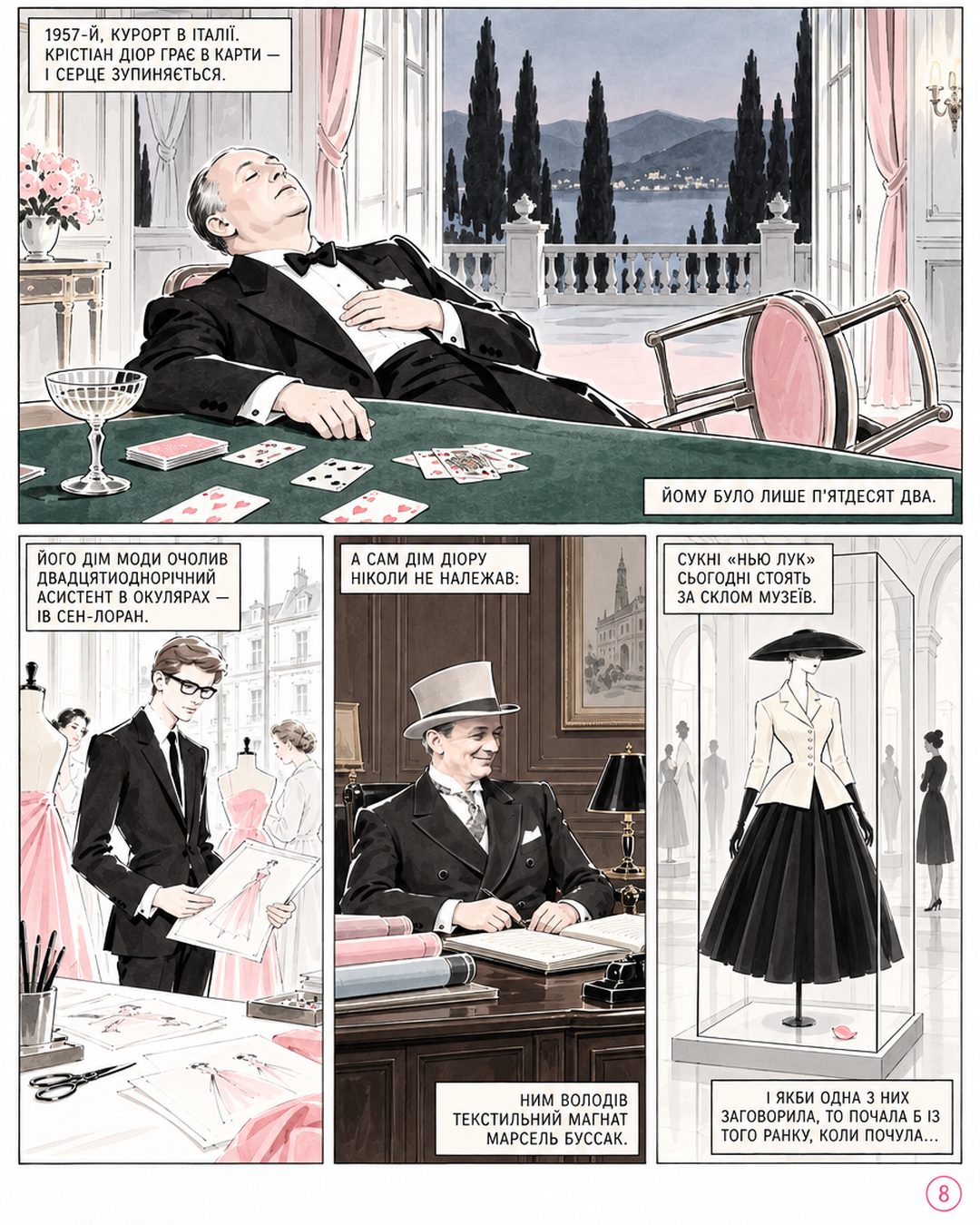
Dior was over forty when he opened his own fashion house—rather late for a revolution. The money came from Marcel Boussac, a textile magnate and one of France’s richest men. Boussac needed women to buy plenty of fabric again. Dior wanted them to feel like women again.
At first Boussac did not offer Dior a new venture. He wanted him to take over an existing fashion house that Boussac already owned. Dior refused: he would work only under his own name. Boussac gave in, and “Christian Dior” appeared on the sign. Legally, though, the house never belonged to Dior. Boussac owned it from the beginning, while the couturier received a salary and a third of the profits.
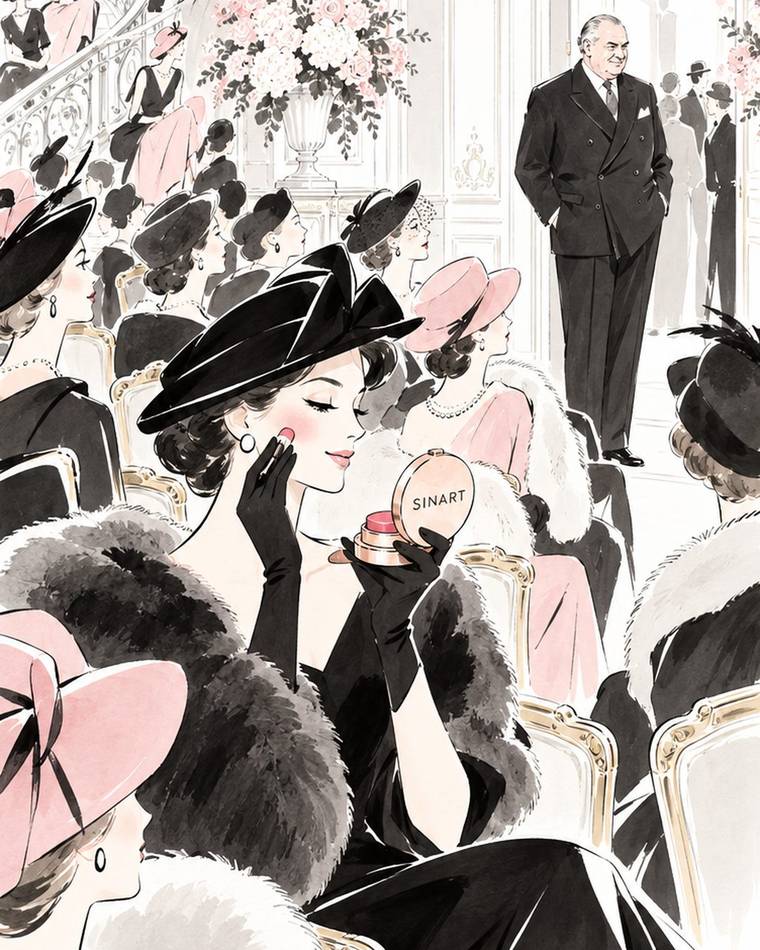
February 12, 1947. A tiny grey-and-white salon at 30 Avenue Montaigne. Editors, buyers and society women filled the room—so many that some sat on the stairs. Boussac himself watched over the entrance.
The first model appeared and the room fell silent. A cinched waist, soft rounded shoulders and a wide skirt below the knees, brushing the knees of the front row. The Bar suit—a fitted pale jacket and black pleated skirt—would become the collection’s signature.
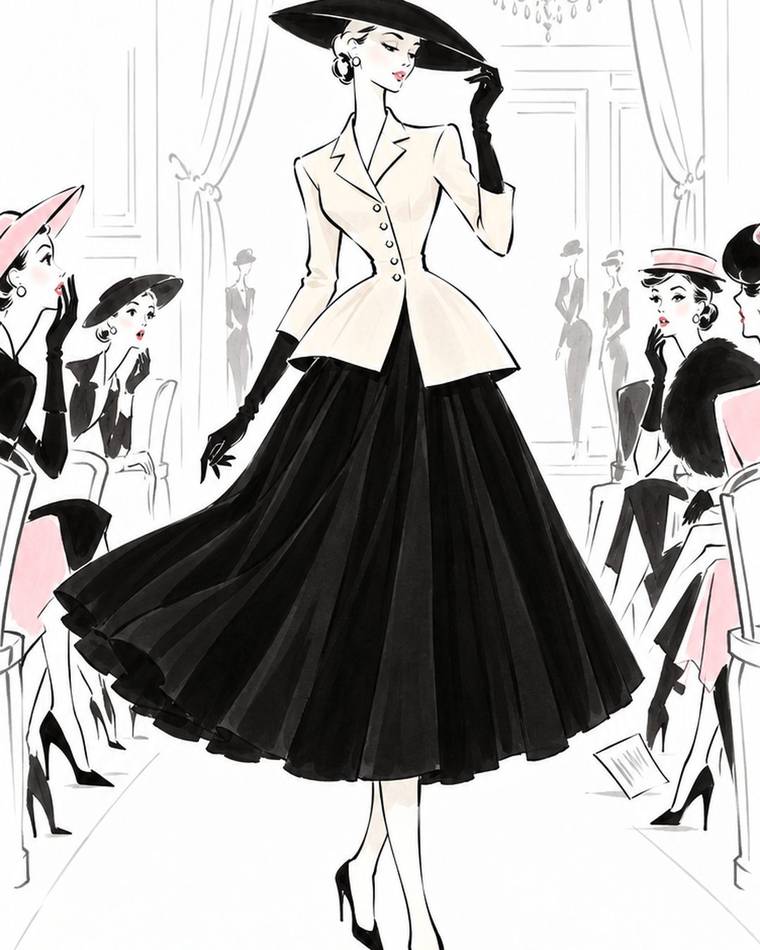
According to the story, American fashion editor Carmel Snow, editor-in-chief of Harper’s Bazaar, stood up and said: “Christian, it’s a revolution! It’s such a new look!” The phrase New Look went around the world. The collection’s official lines had different names: Corolle, meaning “flower corolla,” and En 8, or “figure eight.”
Where did the silhouette come from? Dior wrote that he wanted to create “flower women”, with rounded shoulders, a full bust, a waist as slender as a stem and a skirt as wide as a flower’s corolla. One line in his debut collection was aptly called Corolle. It recalled his mother’s garden in Granville, where little Christian spent hours leafing through seed catalogues. His lucky flower was lily of the valley: a dried sprig was sewn into the hem of every dress, and he carried an antique lily-of-the-valley medallion in his jacket pocket.
Why the perfume was named Miss Dior
That same year, 1947, the house released its first perfume. Dior named it after his sister: Miss Dior. A way to make the world remember the one who survived. That bottle began the brand’s story in beauty.
In 1953, the house launched its first lipstick, Rouge Dior. It was the natural finishing touch for the look: a flower-woman needed vivid lips visible from the other end of the room.
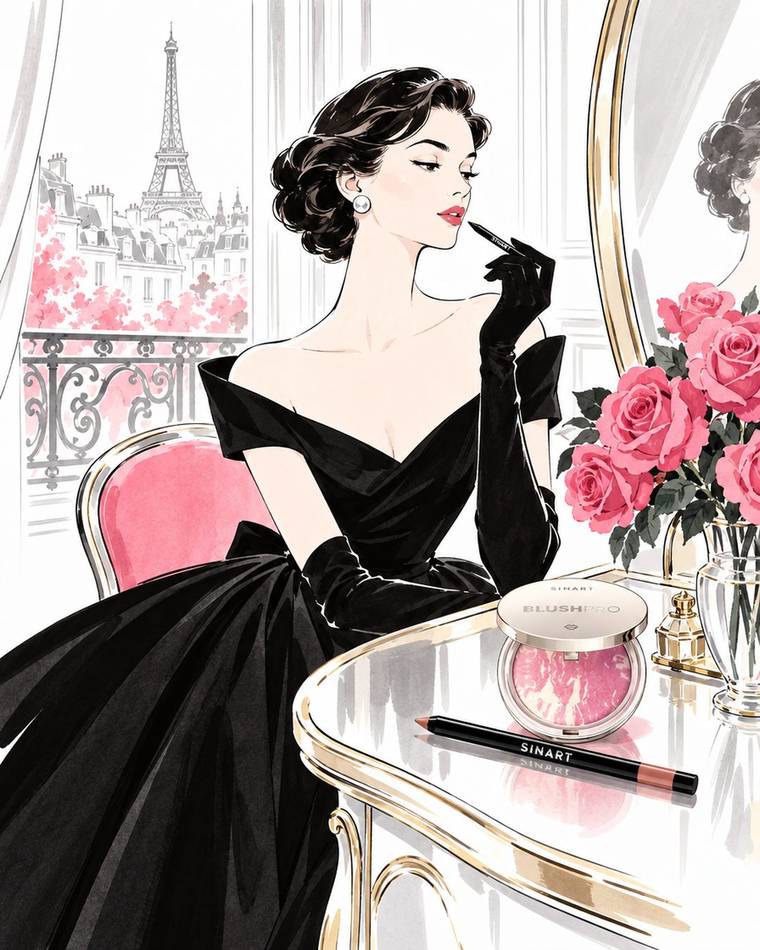
A New Look woman stepped out with clearly defined lips and a flush as if touched by the sea breeze in Granville. Today, the same flower-like look comes together in minutes at the mirror: a neat lip line and a warm touch of colour on the cheeks.
LIPLINERPRO lip pencil defines lips as women did in the 1950s, while BLUSHPRO blush gives the cheeks the fresh colour of a petal.
LIPLINERPRO lip pencil · BLUSHPRO face blush
Brand profile
| Founder | Christian Dior; financed by Marcel Boussac |
| Founded | 1946, Paris (first show: February 12, 1947) |
| Address | 30 Avenue Montaigne |
| First collection | Corolle and En 8, later known as the New Look |
| Iconic products | Bar suit, Miss Dior perfume (1947), Rouge Dior lipstick (1953) |
| Owner today | Bernard Arnault’s LVMH Group |
How Christian Dior died and who led the house after him
For ten years, Dior set the tone for how women should look. His shows were awaited like film premieres, and in March 1957 his face appeared on the cover of the American magazine Time.
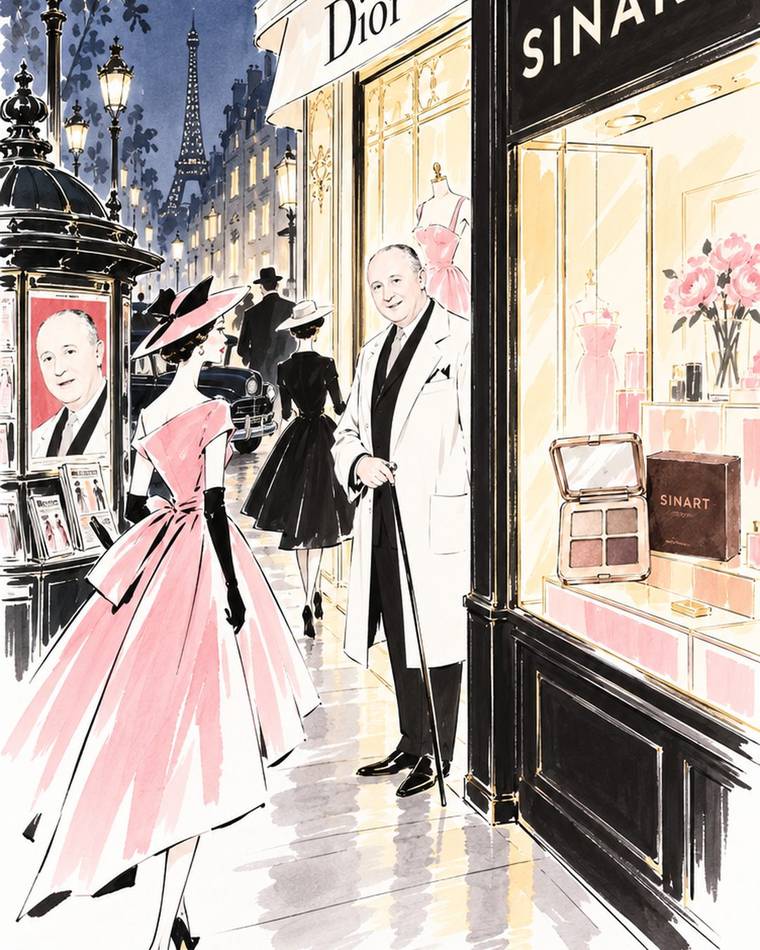
It seemed like the summit. October 1957, the Italian resort of Montecatini Terme. According to a widely repeated account, Dior was playing cards when his heart stopped. He was only fifty-two.
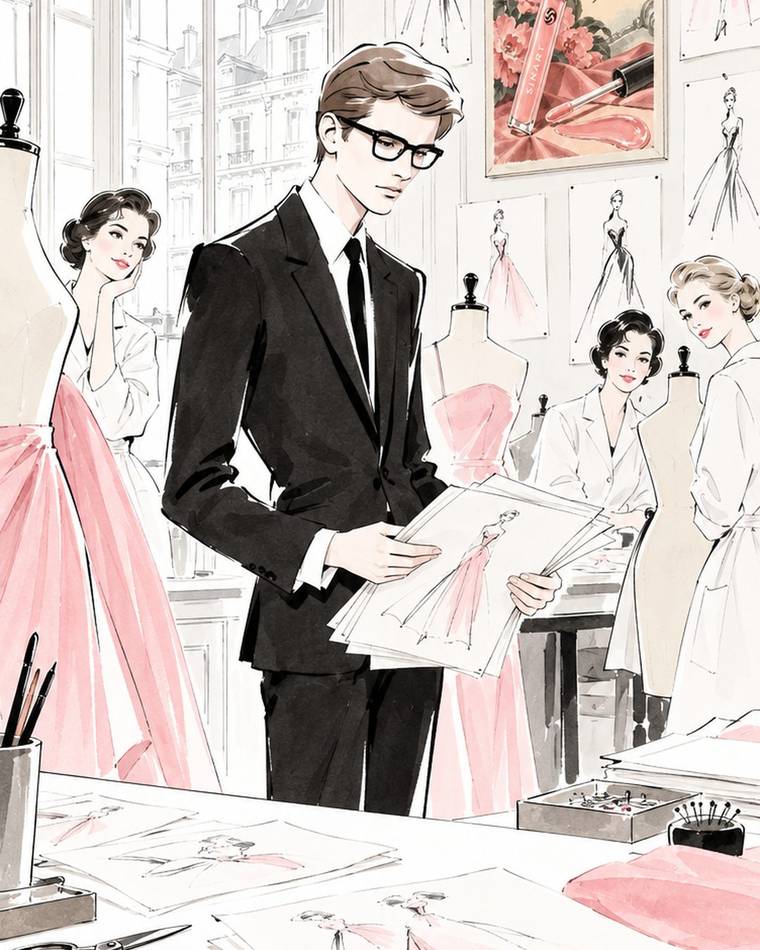
The house was taken over by his twenty-one-year-old assistant in glasses, Yves Saint Laurent. The story of how that shy young man later dressed women in tuxedos is told in the series “Yves Saint Laurent: The Tuxedo for Women.”
Dior’s untold stories
Fortune-tellers instead of a business plan. When Marcel Boussac offered Dior the chance to lead his existing fashion house, Dior refused: it had to carry his own name. Boussac agreed, set aside six million francs and unlimited credit, and promised Dior a third of the profits. But Christian gave his final “yes” only after two fortune-tellers approved. He carried charms throughout his life, consulted an astrologer and believed in signs of fate.
The other woman. Hervé de Charbonnerie, the man for whom Catherine joined the underground, was married and had three children. He never divorced his wife. Did she suspect? History is silent. Catherine never became his wife and had no children of her own, though they spent their lives together after the war. They sold flowers at a Paris market and later grew roses in Provence. He remained faithful to her until his death.
The heart he kept private. Dior loved men and kept it private throughout his life, afraid rumours might damage the fashion house’s reputation. His last love was the Moroccan singer Jacques Benita, thirty years younger than Dior.
The will. Dior had neither a wife nor children. He left his estate equally to two women: his sister Catherine and his loyal assistant Raymonde Zehnacker, whom he called his “other self.”
Who owns Dior today?
The most surprising part of the story is that the House of Dior never belonged to Dior himself. Marcel Boussac owned it from the outset, while the couturier received a share of the profits. Boussac’s empire collapsed in the 1980s, and the brand passed to Bernard Arnault. Today Dior is part of LVMH, the world’s largest luxury group.
Dior beauty grew from those same roots: Miss Dior remains in the collection, and Rouge Dior is one of the house’s signature lipstick lines. The New Look did not please everyone, though. When Coco Chanel returned to fashion in 1954, she offered women a very different freedom of movement—a story told in the fourth episode.
Timeline
| Year | Event |
| 1905 | Christian Dior is born in Granville, Normandy |
| Early 1930s | His father’s bankruptcy, his mother’s death and the sale of the villa |
| 1944 | The Gestapo arrests Catherine Dior and deports her to Ravensbrück |
| 1945 | Catherine returns from the concentration camp |
| 1946 | Dior founds his fashion house with Marcel Boussac’s backing |
| February 12, 1947 | First show on Avenue Montaigne; the New Look and Miss Dior perfume debut |
| 1953 | First Rouge Dior lipstick |
| 1957 | Time cover, Dior’s death, Yves Saint Laurent takes over the house |
Today, New Look dresses stand behind museum glass. The women who once tore at them in Montmartre were wearing cinched waists and full skirts themselves just a few years later—because after the war, they wanted to live, not economise. If one of those dresses could speak, it would begin on that February morning with the words: “It’s such a new look.”
Dior died at the height of his success. The house belongs to others now, but his Granville roses still bloom in every collection. The next episode of “SINART: The DNA of Beauty” looks at Max Factor and how a make-up artist shaped the face of Hollywood.
Which feels closer to you: Dior’s feminine silhouette with a tiny waist, or Chanel’s freedom? Tell us which silhouette makes you feel most yourself.
The story in video
You’ve reached the end—now watch the story on screen. Two and a half minutes about Dior, his sister and the dress that changed fashion.
New episodes of “SINART: The DNA of Beauty” are on our channel—subscribe to SINART on YouTube so you don’t miss the next story.
Frequently asked questions
What is the New Look in fashion?
The New Look is the name given to Christian Dior’s first collection, shown in Paris on February 12, 1947. Its silhouette is recognised by soft, rounded shoulders, a tightly defined waist, emphasised hips and a full skirt below the knees. After wartime years of short, narrow skirts and fabric rationing, it felt like a return to luxurious femininity. The collection’s official lines were called Corolle and En 8; New Look was the nickname given by the press.
Who coined the name New Look?
According to the widely repeated story, the name came from Carmel Snow, editor-in-chief of the American magazine Harper’s Bazaar. After Dior’s first show, she said it was a revolution and “such a new look.” The phrase quickly spread in the press, even though Dior called his lines Corolle and En 8.
When was Dior’s first fashion show?
The first show by the House of Dior took place on February 12, 1947, at 30 Avenue Montaigne in Paris. The fashion house itself was founded in late 1946. The salon was so small that some guests sat on the stairs, and the models walked so close that their skirts brushed the knees of the front row.
Why did women attack Dior’s models in 1947?
After the war, restrictions were still in place in France, some goods were rationed, and women had spent years reworking old clothes. New Look skirts used as much as twenty metres of fabric, which many saw as an offensive display of luxury. A well-known incident took place at a photo shoot in the Rue Lepic market in Montmartre, where angry women rushed at a model wearing Dior.
Who was Miss Dior perfume named after?
Christian Dior named his 1947 perfume Miss Dior after his younger sister Catherine. During the war she was in the Resistance; the Gestapo arrested and deported her to Ravensbrück. Catherine survived and returned in 1945. The fragrance honoured her courage and marked Dior’s first step into beauty.
What happened to Christian Dior’s sister?
Catherine Dior joined the French Resistance and passed on intelligence. The Gestapo captured her in the summer of 1944; after interrogation she was sent to Ravensbrück concentration camp. She returned to France in the spring of 1945, received the Croix de Guerre and later grew and sold flowers.
Who was Marcel Boussac?
Marcel Boussac was a French textile magnate and one of the country’s wealthiest people in the 1940s. He financed the creation of the House of Dior in 1946 and owned it, while Christian Dior received a share of the profits. A silhouette that required a great deal of fabric suited Boussac’s business perfectly.
How did Christian Dior die?
Christian Dior died in October 1957 at the Italian resort of Montecatini Terme, reportedly of a heart attack. According to a widely repeated account, it happened during a card game. He was only 52 and at the peak of his fame: that same year, his face appeared on the cover of Time.
Who led Dior after Christian Dior’s death?
After Dior died in 1957, his 21-year-old assistant Yves Saint Laurent became the house’s creative director. His first Dior collection was a great success. Saint Laurent later founded his own fashion house and created the legendary women’s tuxedo.
Who owns Dior today?
Christian Dior never owned his fashion house; Marcel Boussac owned it from the beginning. After Boussac’s empire collapsed in the 1980s, the brand passed to businessman Bernard Arnault. Today Dior is part of LVMH, the world’s largest luxury goods group.
When did Dior’s first lipstick appear?
The house launched its first lipstick, Rouge Dior, in 1953, six years after Miss Dior perfume. It completed the New Look: a tiny waist, a full skirt and expressive lips. Rouge Dior remains one of the brand’s leading lipstick lines.